

Ocean Depths Explorer
Embark on a journey to explore the mysterious depths of our oceans. Discover fascinating creatures that thrive in the most extreme environments on Earth.
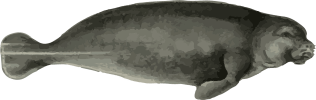
These gentle herbivores are often known as "sea cows" and typically live in shallow coastal waters.

Highly intelligent and social mammals that can dive to depths of about 150 meters.
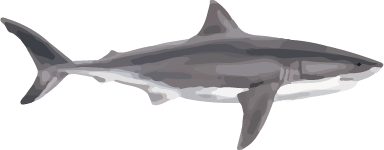
These apex predators can dive to depths of around 1,200 meters, but typically hunt in shallower waters.

Known as "sea canaries" for their wide range of vocalizations, these white whales can dive to about 800 meters.
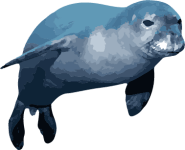
These agile pinnipeds are excellent swimmers and can dive to depths of about 300 meters when hunting for food.

The heaviest bony fish in the world, ocean sunfish can weigh up to 2,200 pounds. They often float near the surface to warm themselves after deep dives.
Sunlight Penetration
As we descend below 200 meters, we enter the Twilight Zone where sunlight gradually fades. Only about 1% of surface light reaches this depth, creating a dim blue environment.

With needle-like teeth too large to fit in its mouth, this fearsome predator uses a bioluminescent lure to attract prey.
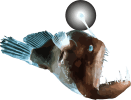
Famous for its bioluminescent lure used to attract prey in the darkness of the deep sea.
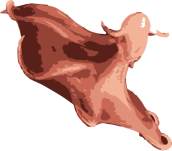
Despite its menacing name, this cephalopod feeds on marine snow - organic material that falls from shallower waters.
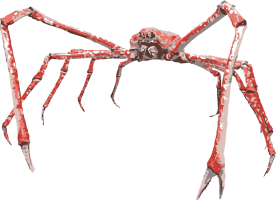
The largest known crab with a maximum leg span of 3.8 meters. They can be found at depths between 300-400 meters.
No sunlight reaches beyond this depth
At around 1,000 meters, we've passed the point where sunlight can penetrate. Many deep-sea creatures cope by creating light themselves through bioluminescence.
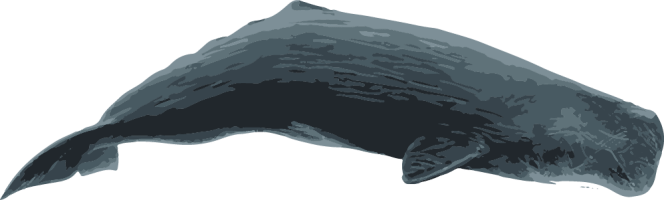
These enormous mammals are the deepest diving whales, able to descend over 2,000 meters in search of giant squid and other prey.

These deep-sea crustaceans can grow up to 50cm long. One in captivity went five years without eating!

The largest known squid species. They can reach a length of 10 meters and weigh up to 700 kg.

Known as "living fossils" because they're the only living species of a lineage that has existed for 125 million years.
Titanic Wreckage - 3,800 meters
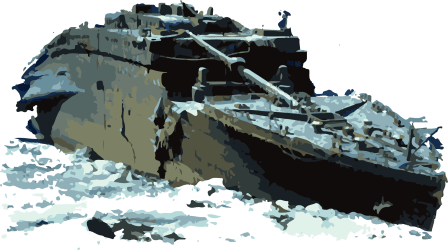
On April 14th, 1912 the Titanic sank to its final resting place at a depth of 3,800 meters.
The extreme pressure, cold temperature, and lack of light at this depth has preserved much of the wreckage, though it is gradually deteriorating due to iron-eating bacteria.
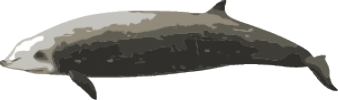
These remarkable mammals hold the record for the deepest and longest dives of any mammal, reaching depths of nearly 3,000 meters and staying submerged for over 2 hours.
Extreme Adaptations
At these depths, many fish have developed special adaptations like large eyes to detect the faintest light, elongated bodies to conserve energy, and bioluminescent organs to communicate and attract prey.
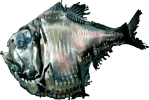
These small deep-sea fish have bioluminescent organs on their bellies that help them blend with the faint light from above, making them nearly invisible to predators below.

These bizarre fish have a transparent head that allows their tubular eyes to collect more light in the dark depths.

Named for their ear-like fins resembling Disney's Dumbo, these gentle octopuses live at extreme depths up to 7,000 meters.

These remarkable creatures live near hydrothermal vents and can grow up to 2 meters long. They have no mouth or digestive system, instead relying on symbiotic bacteria to convert chemicals from the vents into energy.
Extreme Pressure
At this depth, the pressure is over 600 times greater than at sea level. For every square inch of surface area, there's more than 9,000 pounds of pressure.

These unusual sea cucumbers walk along the ocean floor on leg-like appendages. They're among the most common animals in the deepest parts of the ocean.
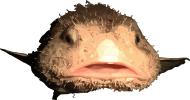
This unusual fish looks quite different in its natural habitat. The extreme pressure at depth keeps its body firm, but when brought to the surface, the decrease in pressure makes it appear gelatinous and blob-like.
The Mariana Trench
We've now entered the deepest part of the ocean — the Hadal Zone, named after the Greek god of the underworld, Hades.
More people have been to the Moon than have visited the Hadal Zone, making it one of the least explored environments on Earth.

These crustaceans have adapted to survive the crushing pressure of the deepest ocean trenches, where they scavenge for food.

Discovered in 2014, these fish live at depths of nearly 27,000 feet, making them the deepest-living fish known to science.
The Ultimate Frontier
The Hadal Zone is Earth's final frontier. We have mapped more of the Moon and Mars than we have of these crushing depths. Each expedition discovers new species and geological features.
The Challenger Deep - 10,935 meters
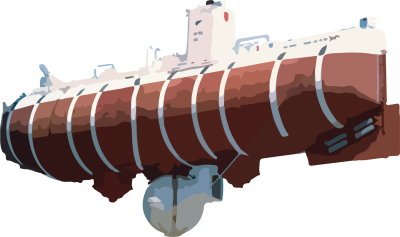
In 1960, Jacques Piccard and Don Walsh made history aboard the Trieste submarine by reaching the deepest point in the ocean - the Challenger Deep in the Mariana Trench.
Even in these extreme conditions, they observed life outside their viewport, demonstrating the remarkable adaptability of life on Earth.
The End of Our Journey
We've reached the bottom of the ocean - one of the most extreme environments on our planet.
Despite crushing pressure, freezing temperatures, and complete darkness, life finds a way to thrive in the most unexpected places.
Our oceans remain largely unexplored, with new species and discoveries being made with each deep-sea expedition.
Thank you for joining this expedition to the depths.
No comments:
Post a Comment